
Ten Days
When police serve a warrant at your door, they come inside. When they serve one on Snapchat, nothing happens.

A warrant is the rule of law made physical. One was served in an active narcotics investigation in my community. The platform holding the evidence sat on it for nineteen days while the case fell apart, and drew no penalty, because the law sets no deadline it can be made to keep. It wasn’t my warrant. But it’s the one that matters to me more than any document on earth. If you care about democracy, or you practice law, this is what its quiet death looks like.
I have a copy of the warrant. A screenshot is below, with the identifying details removed. It is an ordinary document. A judge signed it. It was served on Snapchat as part of an active narcotics investigation in my community.
The warrant issued under Washington’s Uniform Controlled Substances Act, Chapter 69.50 RCW, the search-and-seizure provision at 69.50.509. On its face, like every controlled-substances warrant in this state, it carried a ten-day clock.
What I didn’t understand at the time is the thing I’d ask you to sit with now. I had always assumed a warrant meant the same thing for everyone. If police show up at my house with one, they are coming inside. There is no version of that where I tell them to come back in nineteen days. I assumed it worked the same way for the companies that harvest and control our data. It does not.
Those ten days are the law's deadline for the officer who carries the warrant to go execute it. They are not a deadline for the company the warrant is served on. When a platform is the one sitting on the evidence, no Washington statute sets a date by which it has to answer. There is, technically, a way to force the issue: when a company stalls on an urgent threat, the officer can take it back to the prosecutor and push to compel a faster response. But that path is slow and buried in paperwork, so it is rarely pursued in time to matter. So a judge can sign an order compelling Snapchat or Meta to hand something over, and without that rarely-used escalation it carries about as much weight as a polite request. There is only as long as the company decides to take.
Snapchat took nineteen days.
While that clock ran, a narcotics task force was working the case in the real world. They had surveillance on the house. The police records describe officers watching the suspect come and go. Their plan to make an arrest depended on the records Snapchat had been served to produce.
The records didn’t come in time. So the task force did what under-resourced units have to do: they pulled their people and moved to another case.
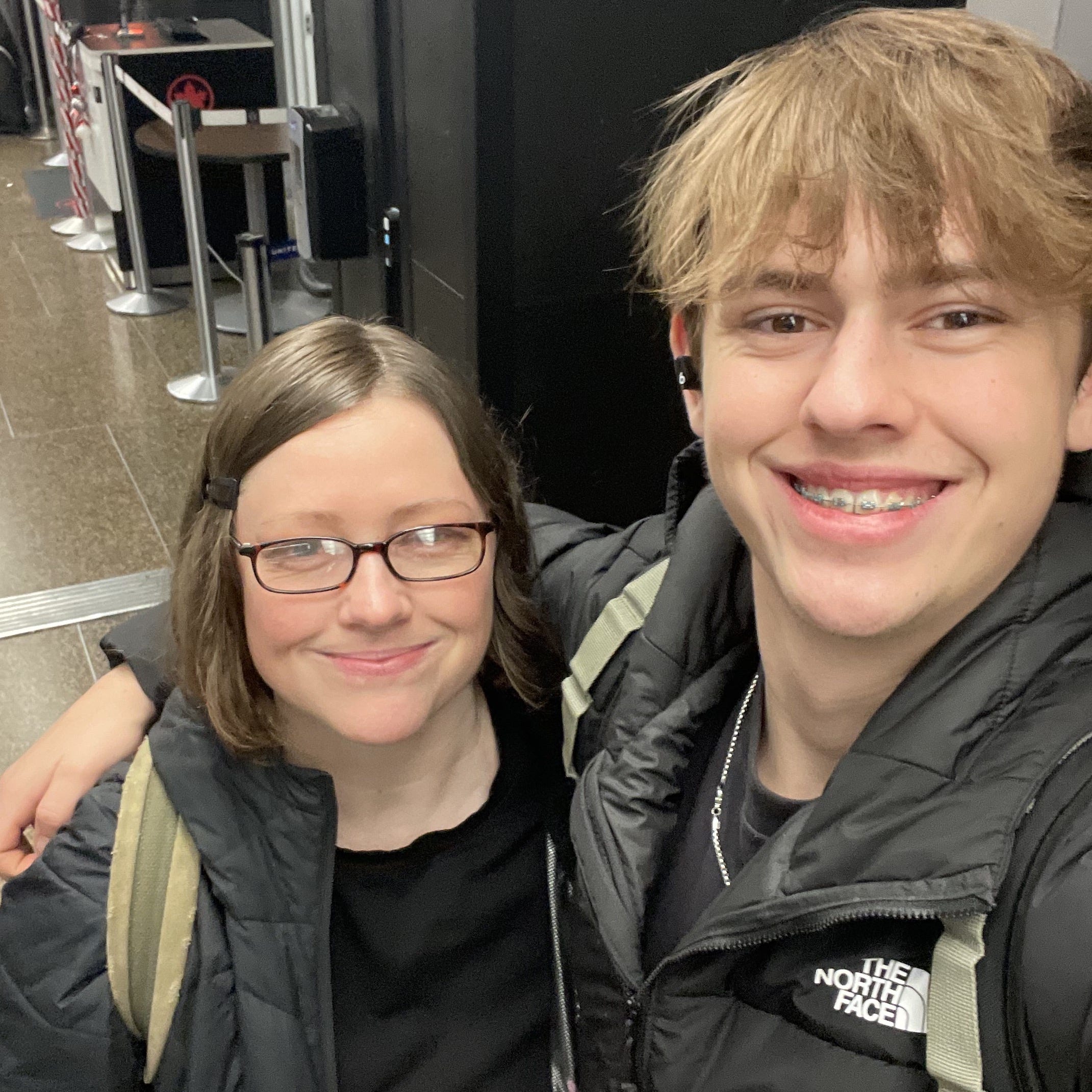
The man under that surveillance kept selling. His Snapchat account stayed open. About four weeks later, my son arrived from New York to visit his mom for Christmas, and died within twenty-four hours.
Same man, same account: TravisOlympia. The one the task force had been watching. The one the warrant was for. The one the arrest was waiting on.
This part I don’t have to speculate about. The detective sergeant who ran that task force told me, by phone, that with those records in hand in time, they would have made an arrest. The evidence was the one thing standing between a stakeout and a case. The company sat on it for nineteen days, and by the time it arrived, the unit had already moved on. The man it would have taken off the street was still on it.
So this is what the record shows. An active investigation turned on evidence a court had ordered a company to produce. The company took its time. An arrest that law enforcement has told me was ready to happen never happened. And the dealer it would have stopped sold my son the drugs that killed him, a month later. Nothing ever attached to Snapchat for any of it. No fine, no finding, no sanction. Not because the company found a loophole, but because there was no deadline for it to miss. The system never set one. A court order to a multibillion-dollar company turns out to carry exactly as much urgency as the company chooses to give it.
And an arrest would have done more than stop one man. He had spent years grooming kids in this community, kids my son knew from his old school, starting them young, the way these dealers do. An arrest is also a message. To those kids, to the parents who had no idea, to the next dealer working the same map. That message was never sent.
And the way Snapchat handled the evidence is a scandal of its own. When the company finally answered that first warrant, before Avery ever died, the records it produced were themselves evidence of drug dealing. Snapchat handed law enforcement proof of crimes being committed on its platform, and left the account running anyway. The dealer kept selling there. In what world does a company hand law enforcement evidence of illegal conduct on its platform, then let that same user keep operating at its place of business?
It gets worse after Avery died. On the advice of Reiko Callner, a former prosecutor I’ll introduce in a minute, I stopped waiting on anyone. I gathered what I could and pushed the police hard, and we pulled the conversation between Avery and the dealer off Avery’s phone, at the device level, before it could vanish. Snapchat is built so those messages disappear on their own. The only reason that conversation still exists as evidence is that we went and took it before the app erased it.
Then a second warrant went to Snapchat, this one for TravisOlympia’s account, in the investigation into my son’s death. When the company answered, the conversation we had already captured was not in what they turned over.
So here is the full shape of it. They answer a court order whenever they choose. And when they do answer, what comes back does not have to be complete. The evidence that mattered in my son’s case survived because a grieving father and a former prosecutor went and rescued it from a phone. Not because the system worked.
That is the whole story, really. Everything after this is just detail. But the detail is where you see how it actually works.
Two stacks of paper

On one side, the public record: the warrant, the investigation, the timeline.
On the other side, the company’s own words. We work closely with law enforcement. Safety is our top priority. We respond to valid legal process.
Read those two stacks side by side and you don’t feel rage so much as vertigo. They describe two different universes. In one, a court speaks and a company answers. In the other, the answer is optional, and everyone involved already knows it.
I’m not going to tell you what was in anyone’s head. I can’t, and I won’t pretend to. I can only tell you what the record shows: a court’s order, a company that answered on its own schedule, and a silence afterward that cost it nothing.
Democracy is already dead for families seeking justice
For the lawyers reading this, here is the core of it.
A warrant is not a request. It is the state’s compulsion, issued by a neutral judge, and its entire authority rests on one assumption: that it binds everyone equally. The corner dealer and the corporation. The powerful and the rest of us. A warrant the powerful can ignore is not a weaker warrant. It is not a warrant at all. It’s a suggestion with a letterhead.
We picture democracy dying in dramatic ways: tanks, stolen elections, a strongman at a podium. But it also dies quietly, in the gap between an order and its enforcement. It dies when the law still reads the same but stops applying the same. By the time those records finally arrived, the principle of equal law had already failed in my son’s case. It didn’t need to be repealed. It just needed to be enforceable against the people big enough to wait it out.
That’s the thesis of this whole project, and I’ll keep returning to it. For some families, the rule of law is already dead. We’re just the ones holding the paperwork.
Two dealers, two sentences
Here’s what unequal enforcement looks like with the volume turned all the way up.
In October 2023, the actor Matthew Perry was found dead from the acute effects of ketamine. Federal prosecutors built a case against five people. One of them, a North Hollywood woman the press christened the “Ketamine Queen,” had run a high-volume operation serving wealthy, well-connected clients. In April 2026 she was sentenced to fifteen years in federal prison. The Justice Department made sure the public heard about it, a warning, they said, to anyone selling controlled substances to vulnerable people.
Most drug cases in America never get expedited to federal court, where the real warnings tend to happen. More often they play out like the ones I covered in Episode 6, Muted Cases.
TravisOlympia had been selling to local children for years. He groomed them. Started them young, vapes first, when they were barely old enough to be curious, because all the other kids were already doing it, and saved the harder stuff for later.
For months I watched the case move toward a plea, and felt the specific helplessness of a parent who can see exactly where something is heading and has no standing to stop it. When it finally resolved, the plea was clean: thirty-four months. I released Muted Cases the day he was sentenced. The file closed. The community was never given his history, and never given a public warning through the court.
Same conduct: selling the drugs that killed someone. The “Ketamine Queen” got fifteen federal years and a press conference after killing a famous adult. The thirty-four-year-old felon who killed my sixteen-year-old son got thirty-four months and a closed file.
The difference was never the evidence. The difference was who the victims were, and which office decided the case was worth the fight.
This is not the work of one bad prosecutor. It’s the structure. The bulk of these deaths land in local courts that are chronically short-staffed. Washington has a documented shortage of both public defenders and deputy prosecutors, under caseloads that reward closing a file over winning a trial. A trial risks a loss and eats months. A plea closes the file by lunch. The path of least resistance is paved and well lit. So the celebrity cases get the cameras, and the children get a docket number.
There’s another version of this in Episode 6: Sam Chapman, whose sixteen-year-old son Sammy bought a counterfeit pill on Snapchat during the pandemic lockdown. It was delivered to their home, Sam says, “like a pizza,” in a dose of fentanyl that killed him in his own front yard. The police wouldn’t even call Snap; in their experience, the company doesn’t help and doesn’t return the calls. Only after Sammy’s family went on the national news did detectives come back and open a real homicide investigation. As Sam put it: “If you’re famous or getting press, you get attention. And if not, you can just suck it and wait and wait and maybe never get justice.” When investigators finally identified the dealer, who was already in custody on another charge, the Los Angeles County District Attorney at the time, George Gascón, declined to prosecute and let him walk out.
Bought, layer by layer
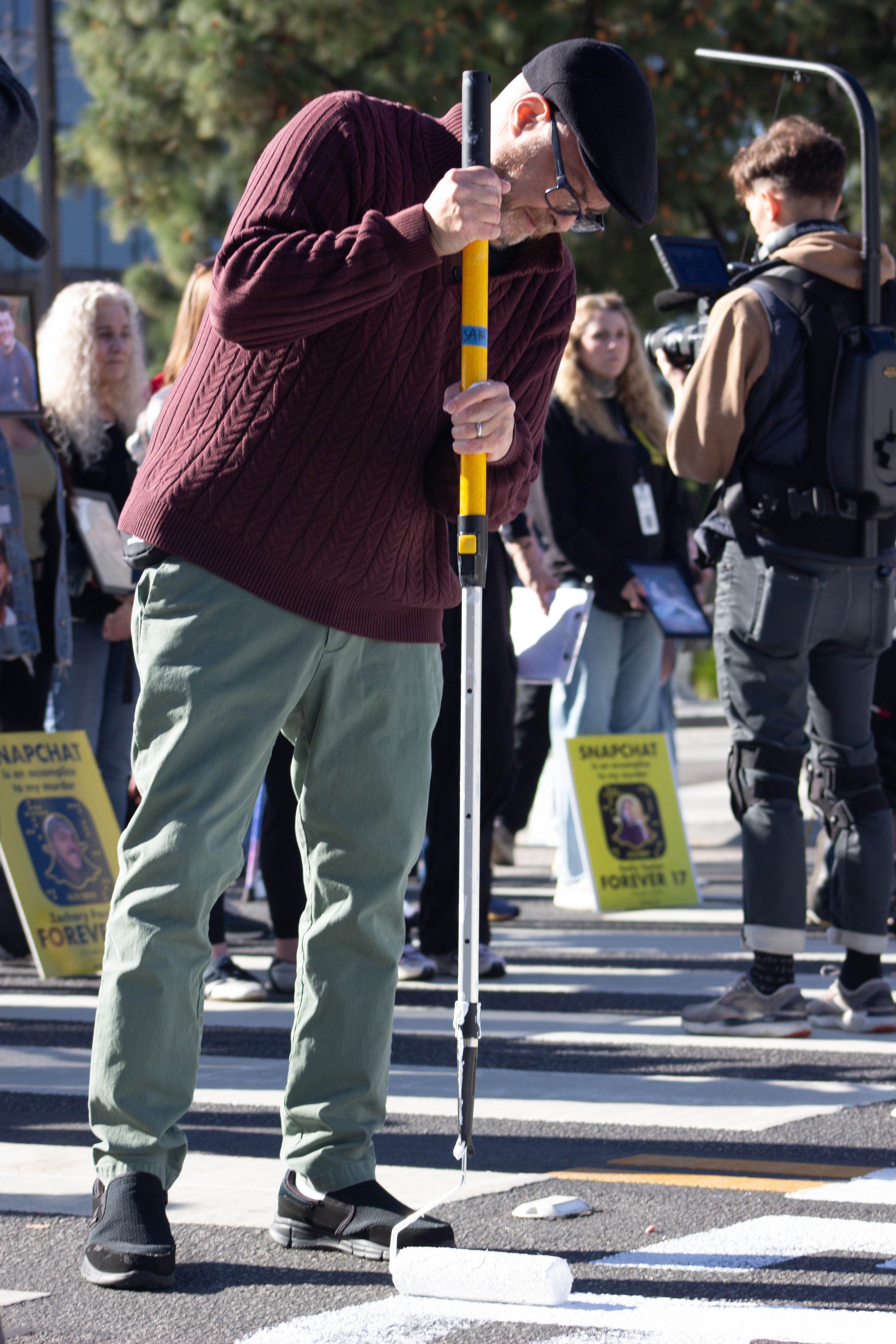
The non-enforcement isn’t random. It’s bought, layer by layer. That’s what most of this season has been about.
In Episode 7, Wolves and Children, Julia Duncan of the American Association for Justice laid out the lobbying spend, tens of millions a year from a single platform, and named the playbook. The tobacco companies fought warnings because they knew that hooking kids early meant “lifelong human beings to make money off of. Their health be damned.” Same logic, new product. Behind closed doors, she said, corporations will tell you “it is cheaper and faster to be able to do whatever you want and kill people.”
Brody Mullins, the Pulitzer Prize-winning investigative reporter who spent two decades covering lobbying for the Wall Street Journal and wrote The Wolves of K Street, explained why the outrage in a congressional hearing rarely survives it. "The dirty little secret," he told me, "is that these members of Congress are playing a game." They bash the CEO while the cameras roll, then head to the fundraiser once they're off.
And Sarah Gardner of the Heat Initiative described what surfaced only because judges forced these companies to turn over internal records: while a platform ran ads about how hard it works to protect teenagers, its own people were privately comparing the business to drug pushers.
None of it is a glitch. It’s the rational output of a system where a dead child is a line item and accountability is a maybe.
If you don’t try…
But “rational” is not the same as “inevitable.”
In Episode 8, Out of Balance, I sat down with Reiko Callner, the former prosecutor I mentioned earlier, the one who told me to stop waiting and gather the evidence myself. She spent about a decade prosecuting cases in this community and has practiced law for nearly forty years. She has no illusions about how hard these cases are. And she said the thing I want every prosecutor reading this to hear:
“Of course there are going to be evidentiary issues. Of course there are going to be issues where evidence might be suppressed... But if you don’t try, it’ll never happen for sure. You can guarantee it won’t happen.”
If you don’t try, you can guarantee it won’t happen.
That’s the whole argument, from someone who has stood at that table. Digital evidence is hard. Many of the precedents for trial predate digital forensics, and common law hasn’t kept pace. The defense will push. Some of it gets thrown out. That’s the job, not a reason to decline it
The rule already exists. Just not here.
When I say the system never wrote the rule, I have to be precise, because that’s finally starting to change in some states.
California did it first. SB 918, signed in 2024, requires any platform with a million or more users to staff a law-enforcement hotline and comply with a search warrant within seventy-two hours. In March 2026, Colorado passed its own version, SB26-011: eight hours to acknowledge a warrant, seventy-two to comply, a staffed hotline. A Republican and a Democrat carried it together.
New York has the same bill. A8022A passed the Assembly unanimously this February. Its Senate companion, S8217A, is still sitting in committee, with a deadline of tomorrow. The bill exists because my father, Martin Ping, Avery’s grandfather, went and asked for it. Its sponsors trace the idea straight back to my son’s death.
The industry fights these laws everywhere, and the fight is revealing. When Sam Chapman testified for SB 918 in California, a NetChoice lobbyist sat down next to him and called the bill too burdensome. As Sam tells it in Muted Cases, the committee chair turned to the lobbyist, while a grieving father sat beside him, and said his objections “don’t mean anything,” because the industry will fight anything brought before it. The bill cleared committee nine to zero.
In New York, my father heard the other version: that making a company answer a warrant is a step toward a government surveillance state. The nerve of that. These are the companies whose entire business is surveilling and manipulating us and our kids. Surveillance is fine, apparently, as long as they are the ones doing it.
Underneath both is the real fear, that if California requires it, every state will, and compliance becomes too much to handle. Too much. Protecting children too much. Set that against what it would actually take. Change the business practices that put kids within a predator’s reach. Spend a sliver of the billions going into AI on answering warrants faster. Staff the desk that already handles these requests. There is no clearer picture of profit mattering more than a child’s life than the richest companies on earth fighting a basic operational system built to protect children from known harms on their own platforms.
Seventy-two hours. Hold that against the nineteen days my state allowed, with no rule at all. The question is no longer whether a deadline is possible. Other states have already proved it is. The question is why Washington still refuses to require one.
And in Washington, where my son died, I still cannot find a single legislator willing to sponsor it. New York will at least hear the bill my father carried there. My own state won’t even introduce one. Not a sweeping reform. Not a fight over Section 230. Just basic operational accountability: when a court orders you to turn over evidence on a predator using your platform to target children, whether they’re grooming them for sexual abuse, extorting them for money, or selling them drugs, you answer on a clock, and something happens if you don’t.
That is the bill no one in my state will put their name on. And I think I know why.
I’ll mark it as a belief, because I can’t see inside anyone’s calculations, only the incentives they sit inside. Everyone elected to office runs on money. There is a number you have to hit to stay competitive, and you hit it by not making enemies of the people who write the checks. In Washington, the technology industry is one of the largest engines of the state’s economy and a major source of its campaign money. You don’t have to picture anyone taking a bribe to see what that does to a legislator deciding whether to attach their name to a bill the industry would rather not see. The math discourages it before the first conversation.
It’s the same thing Brody Mullins described from the federal level in Episode 7. Bash the company on camera, then drive to the fundraiser. It just runs quieter at a state house.
So a basic, bipartisan, seventy-two-hour rule to answer a warrant a judge has signed sits without a sponsor. And the protection runs one way: toward the companies, and away from the constituents the warrant was supposed to serve.
What this is?
Superhuman - From Engineered Desire to Engineered Consent is an investigation into how platforms built to capture children are protected: by law, by money, and by the quiet incentives that keep cases like my son’s invisible. I’m not a lawyer. I’m a father with a screenshot of a warrant that a court signed and a company answered too late to matter.
If you still believe the law is supposed to apply to everyone, this is for you.
Ten days is what the law asks of the officer who carries the warrant. Of the company holding the evidence, it asks nothing at all. Until that changes, this keeps happening.
This is Superhuman.


Episodes 6, 7, and 8 — "Muted Cases," "Wolves and Children," and "Out of Balance" — are out now. Listen and subscribe at @ https://superhumanpodcast.substack.com/p/listen-to-superhuman
.
Incredibly sorry for your loss and the criminal corporate lack of accountability involved.